News / Blog
An Olive Tree, a Key, and the Hope of Return: Gaza’s Story at COP31
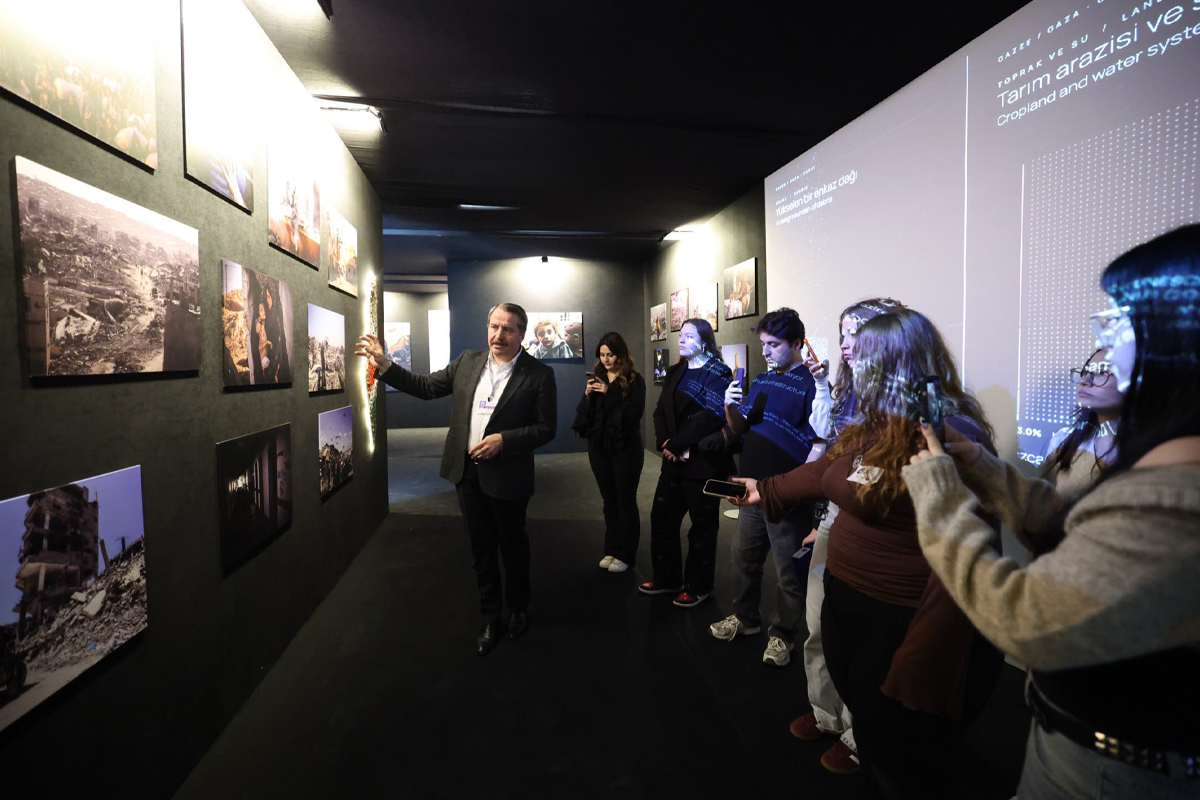
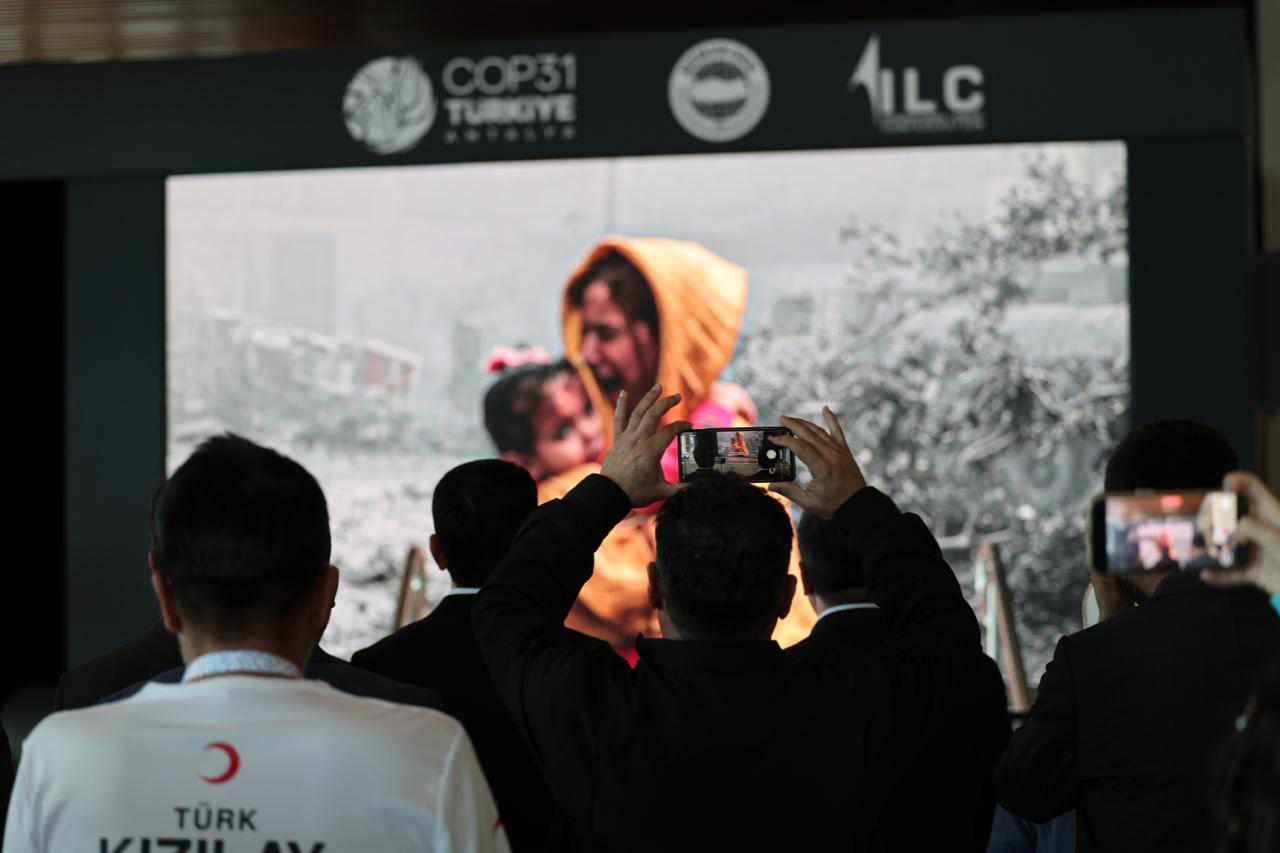
Inaugurating the exhibition, LC President Ali Yalçın called on world leaders, the United Nations, international organisations and civil society to take concrete action to help restore Gaza and rebuild the lives of its people.
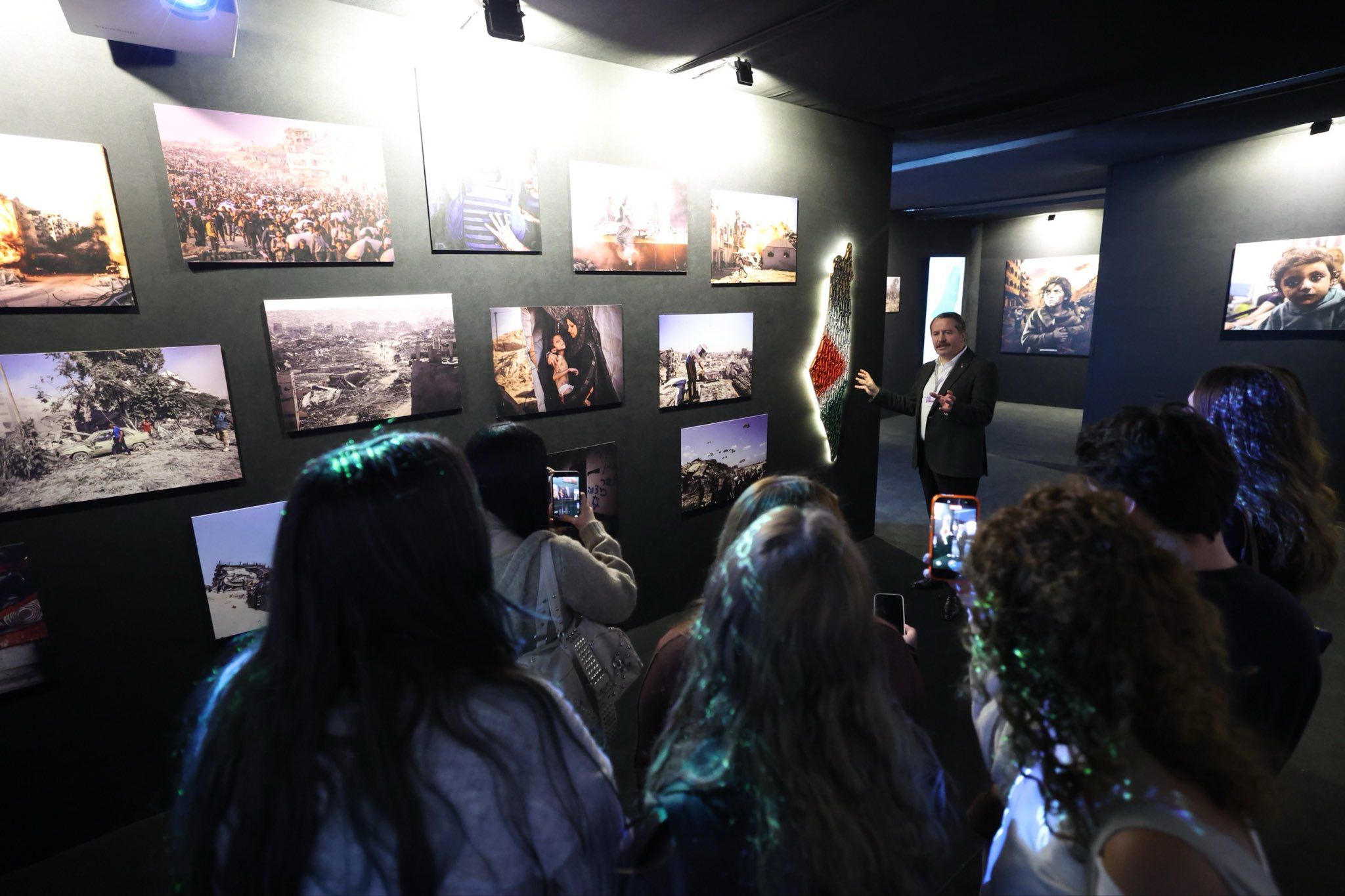
The exhibition opened in the COP31 Green Zone, drawing attention to the humanitarian and environmental destruction in Gaza while highlighting Palestine’s rich cultural heritage and the Palestinian people’s resilience and determination to preserve their identity and rebuild their future.
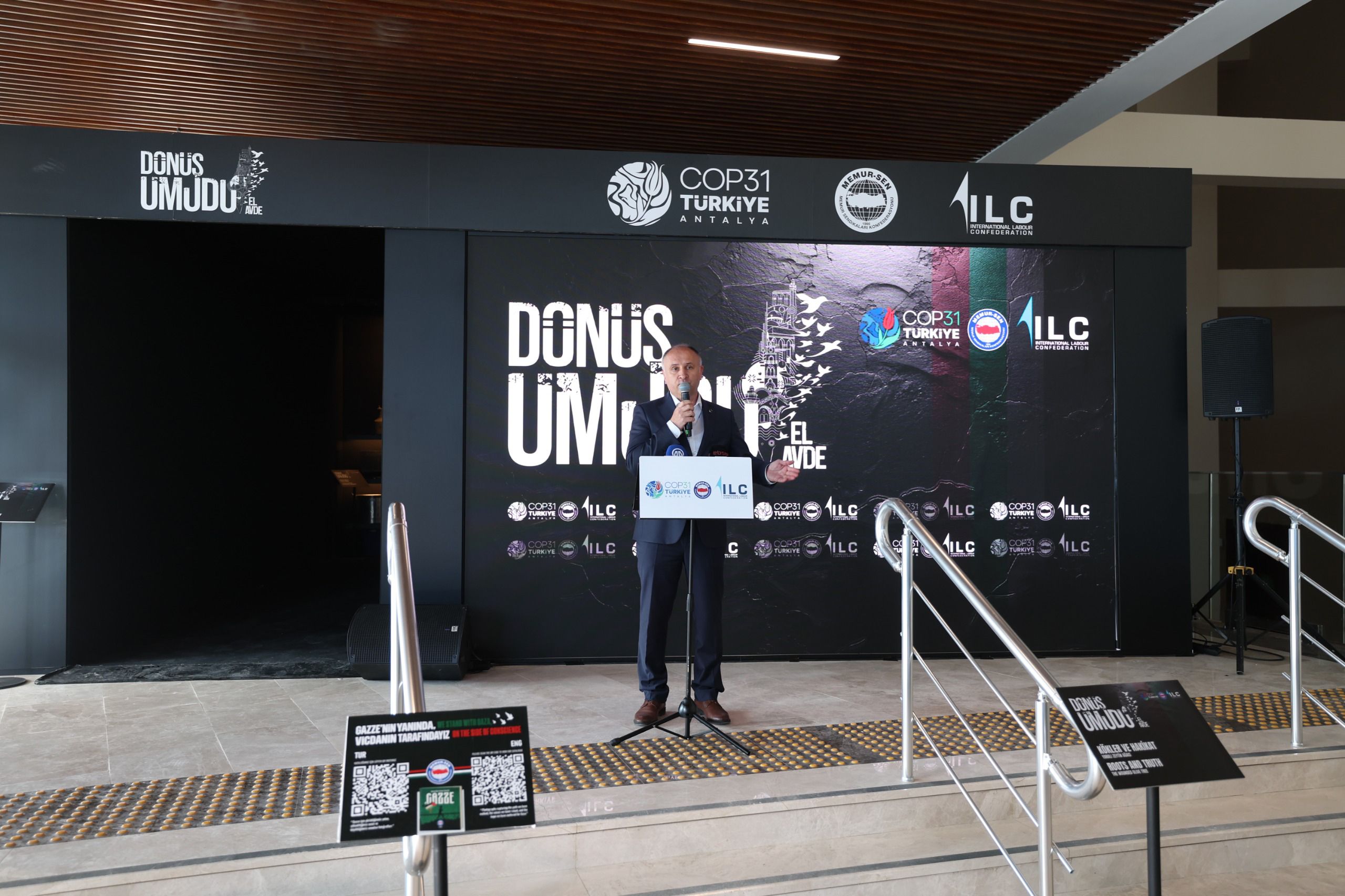
Located in the Congress Centre foyer as part of COP31, hosted by Türkiye, the exhibition was inaugurated by ILC President Ali Yalçın, alongside vice presidents, trade union leaders and guests from Türkiye and abroad.
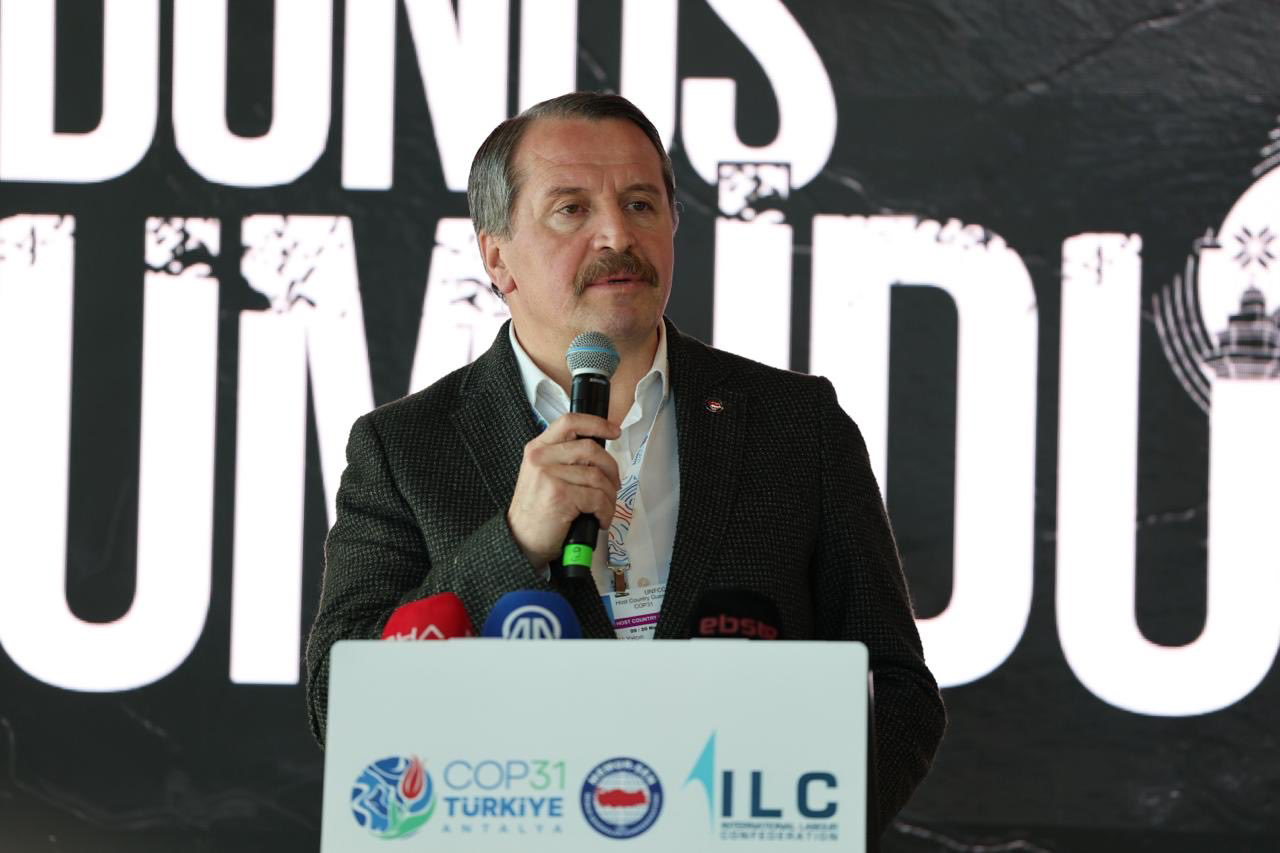 Bringing Gaza’s Memory and Hope to COP31
Speaking at the opening ceremony, Ali Yalçın emphasised that the exhibition was more than an artistic and immersive experience. It was a testimony to the Palestinian people’s collective memory, their attachment to their homeland and their enduring hope for the future.
“Today, we are not simply opening an exhibition. We are bearing witness to the memory of a city, a people’s love for their land, and the hope they keep alive despite every hardship. This story contains pain, longing and loss. But it also contains a hope that never fades. Because Gaza’s story did not begin with rubble, and it will not end with rubble.”
Explaining the significance of the olive tree at the heart of the exhibition, Yalçın described it as a symbol of continuity, belonging and the shared memory of generations:
“In Palestine, an olive tree is never just a tree. It is a family’s past, a father’s toil, a mother’s labour and a child’s future. Olive trees rooted in the same soil for centuries carry the shared memory of generations. The olive tree means roots. It means memory. It means abundance and peace. The story of a tree whose roots hold firmly to the soil does not end when its branches are broken.”
Yalçın also explained the deeper meaning of Al-Awda, the Arabic word for “return”, emphasising that it represented much more than a physical return to a place:
“Al-Awda means ‘return’ in Arabic. But for the Palestinian people, this word means much more than going back to a place. Al-Awda is the hope of returning to the land, to memories and to life. It means sowing crops in fertile soil, harvesting olives and embracing the future with hope.”
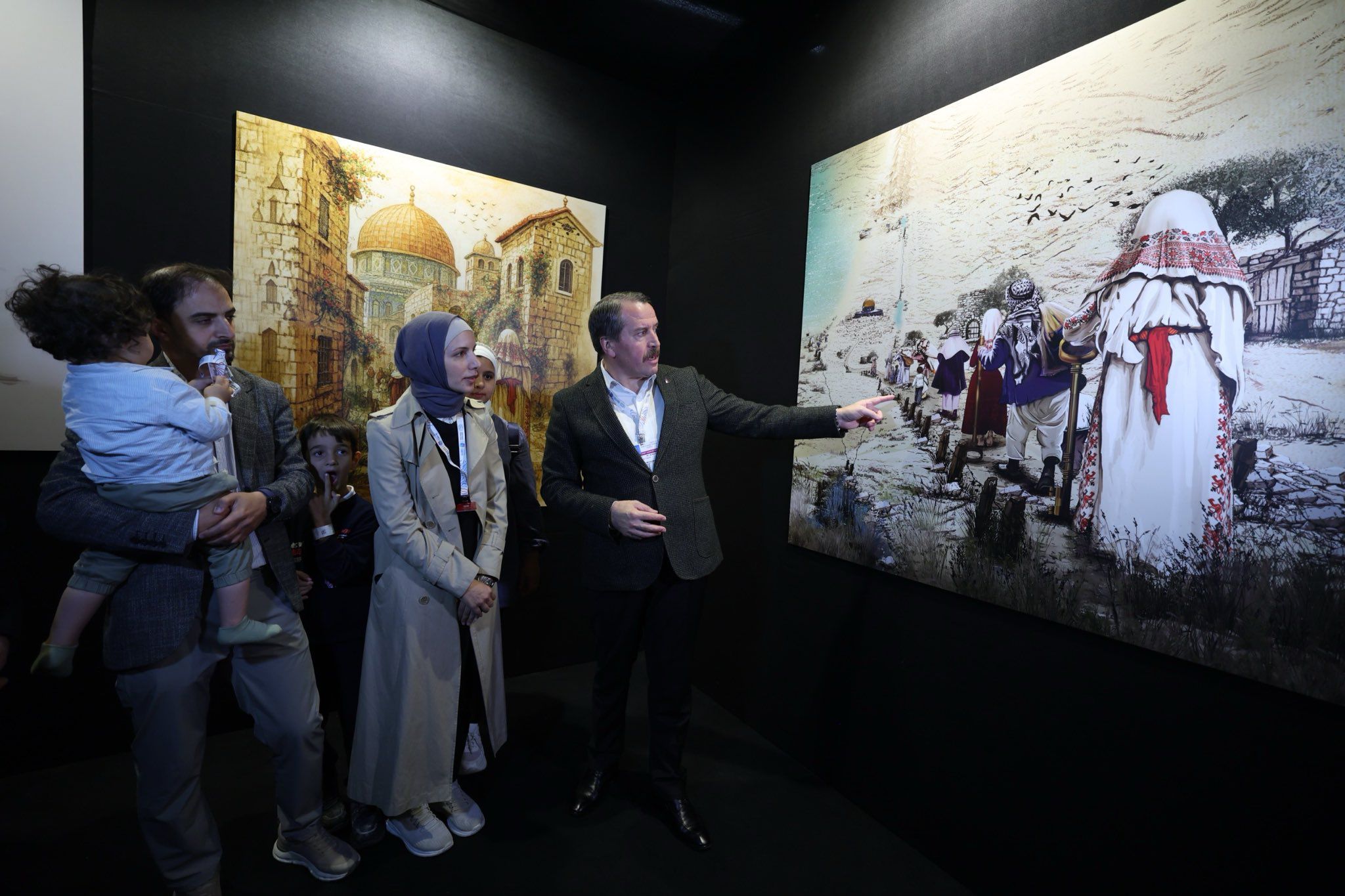 Another powerful element of the exhibition was a map created from nearly one hundred keys, symbolising the Palestinian people's longing to return to their homes and the transmission of that hope across generations.
“A key does more than open a door. It connects the past with the future; it carries the hope of returning home one day. A house may be demolished. A door may be removed. But the hope of opening that door again cannot be destroyed.”
“There Can Be No Sustainable Future Without Peace, and No Genuine Transformation Without Justice”
Connecting the exhibition's message to the global climate agenda, Yalçın stressed that discussions on environmental sustainability and the future of the planet must also address the devastating consequences of war.
He pointed out that the destruction in Gaza extended far beyond the immediate humanitarian catastrophe, leaving profound environmental, cultural and social consequences that would affect generations to come.
Citing research findings, Yalçın drew attention to the scale of the devastation:
“The combined explosive power of the munitions dropped on Gaza is reported to be equivalent to 13 Hiroshima atomic bombs. More than 61 million tonnes of rubble have been left behind. Some 164 historical and cultural heritage sites have been damaged. Greenhouse gas emissions associated with the war and destruction are estimated to have reached 33.2 million tonnes of carbon dioxide equivalent. Over the past three years, nearly 80,000 of our Palestinian brothers and sisters, including 25,000 children, have been systematically killed, while hundreds of thousands have been left with injuries and disabilities from which they will never fully recover. These figures convey more than the scale of destruction; they reveal the deep wounds inflicted on a people’s memory, land and future. The destruction of a city affects not only the present, but also the lives of generations to come.”
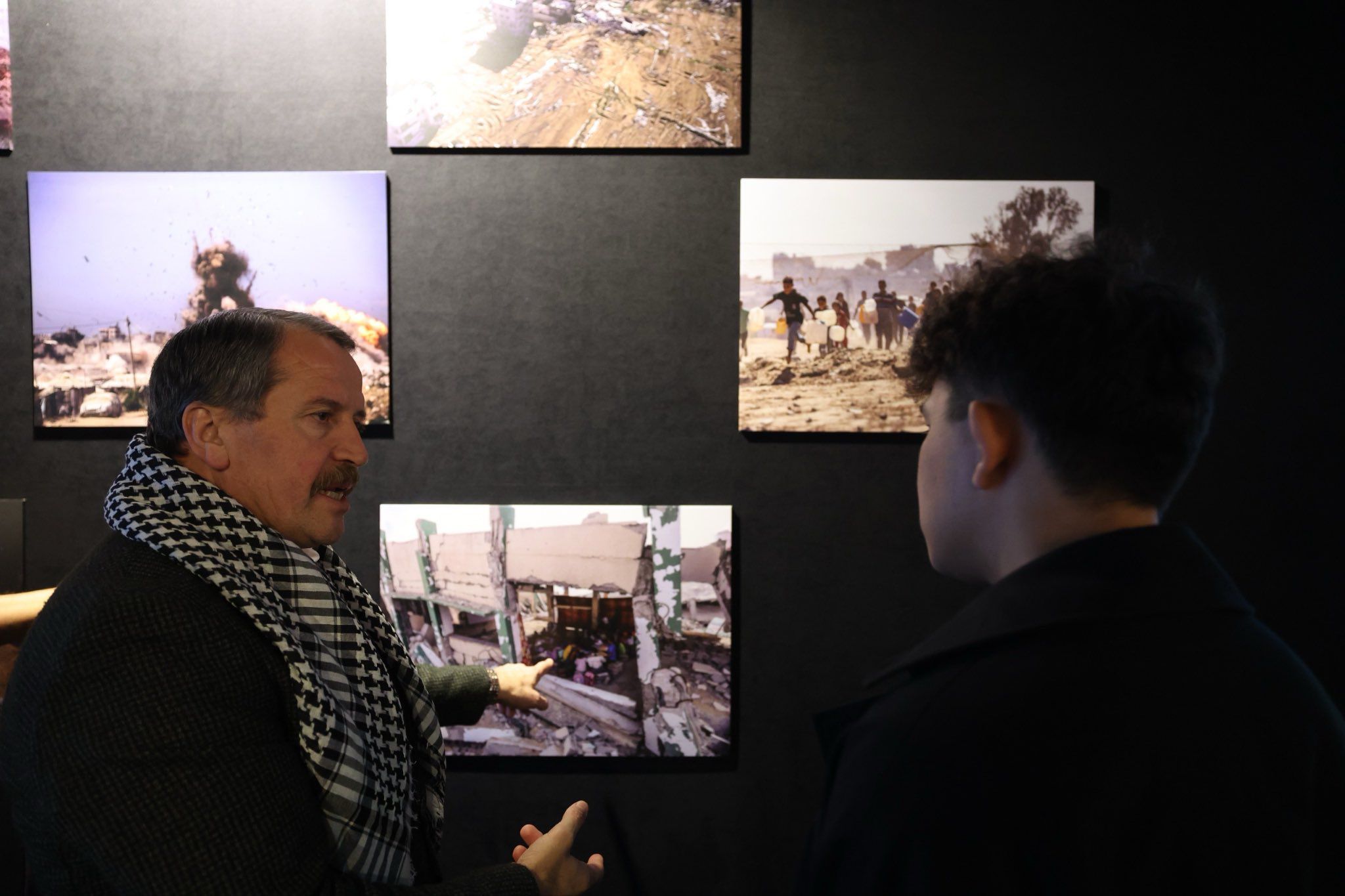 Calling for a collective international response, Yalçın urged world leaders, the United Nations, international organisations and civil society to assume responsibility for restoring the conditions necessary for a dignified and sustainable life in Gaza:
“Let us act to restore Gaza’s soil, clean its water, and rebuild its olive groves, schools and hospitals. Let us provide the people of Gaza with conditions in which they can live safely, work productively and look to the future with hope. Helping Gaza flourish again is a shared responsibility of humanity. Because there can be no sustainable future without peace, and no genuine transformation without justice.”
Paying Tribute to Palestinian Mothers
Yalçın also highlighted the artworks created by artists from Gaza and featured in the exhibition. He noted that these works reflected not only suffering and loss but also resilience, creativity and the determination to rebuild life. Even the drawings of children, he observed, carried powerful messages of hope.
Paying special tribute to Palestinian mothers who continue to care for their children amid hunger, cold, disease and bombardment, Yalçın emphasised their extraordinary courage and determination:
“In Gaza, a mother embracing her child expresses more than love; it expresses the determination to hold on to life. From here, we extend our heartfelt gratitude to the heroic mothers of Palestine, who keep their people’s future and hope alive despite every hardship.”
Reaffirming the International Labour Confederation's commitment to human dignity and solidarity, Yalçın stressed that defending the dignity of labour also meant defending the fundamental right to life, security and a sustainable future.
He underlined that workers and their families must have the opportunity not only to earn a living, but also to live in safety, remain connected to their land and build a better future for their children.
Concluding his remarks, Yalçın returned to the exhibition's central symbols of the olive tree, the key and the hope of return:
“A tree flourishing again means hope. A door reopening means reunion. A child smiling again is humanity’s greatest achievement. May Gaza’s children return to their homes, and its olive trees welcome spring once more! May Gaza’s keys open doors again! When Gaza’s olive trees flourish again, it will be more than the land coming back to life: humanity’s hope will flourish too. This is what we mean by ‘Hope of Return: Al-Awda.’”
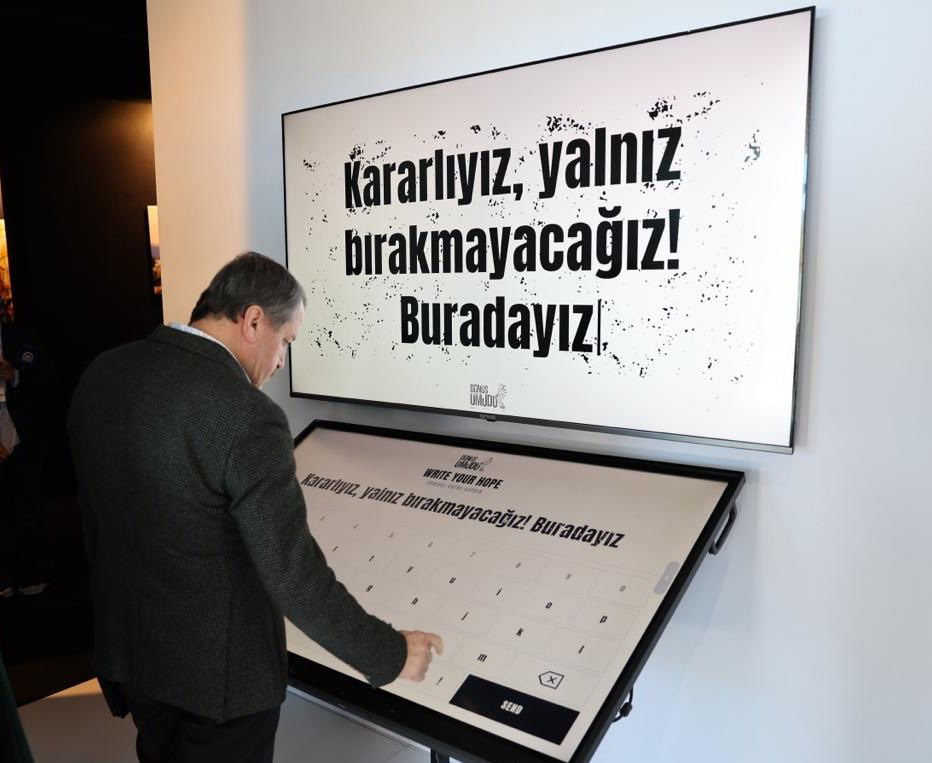
Yalçın also invited those unable to visit the exhibition in person to explore it online and experience the stories of memory, resilience and hope that it seeks to preserve.
An Olive Tree, a Key, and the Hope of Return: Gaza’s Story at COP31
ILC & Memur-Sen will participate to Bring the Voice of the Labour Movement to the COP31 Agenda
We Met with a Delegation from GFIW, Our Executive Board Member, in Ankara
ILC and CLATE Call for Joint Action and International Solidarity
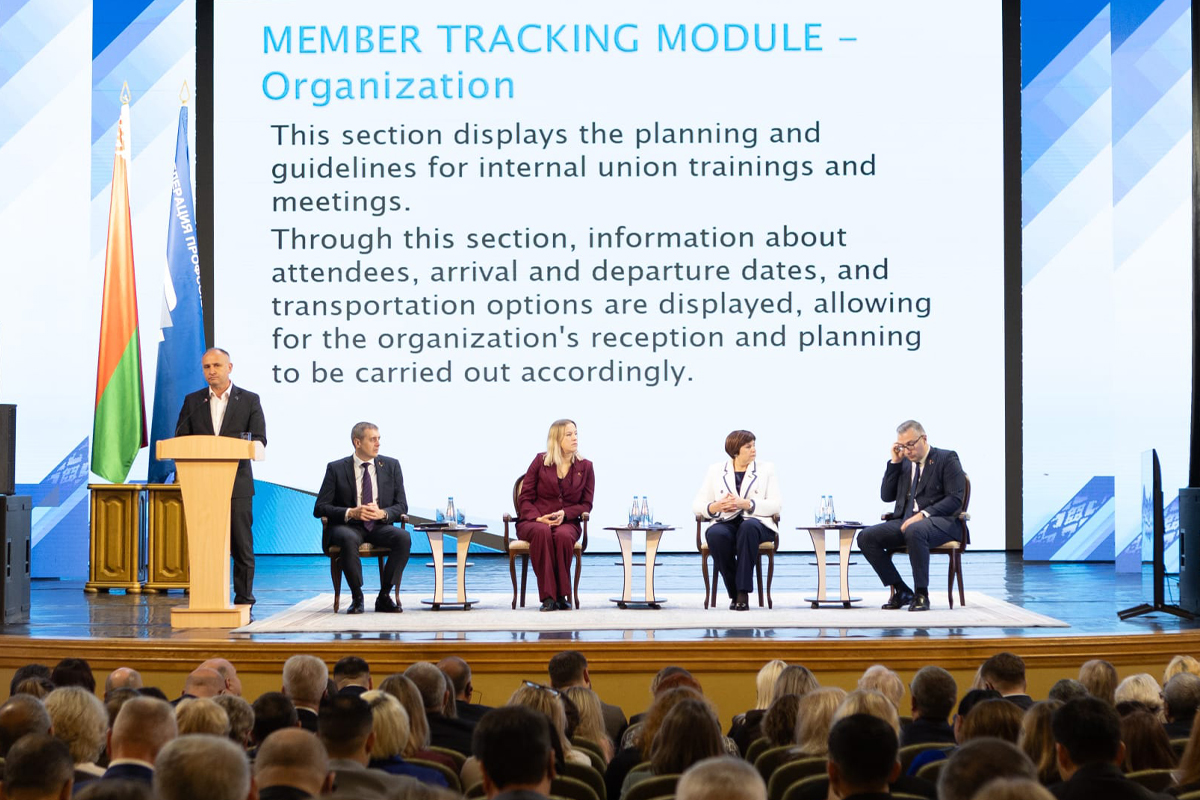
ILC Secretary General Hamza Öksüz Addresses the Future of Labour Amid Technological Transformation in Belarus
WORLD DAY FOR DECENT WORK
Statement on the International Day of Peace
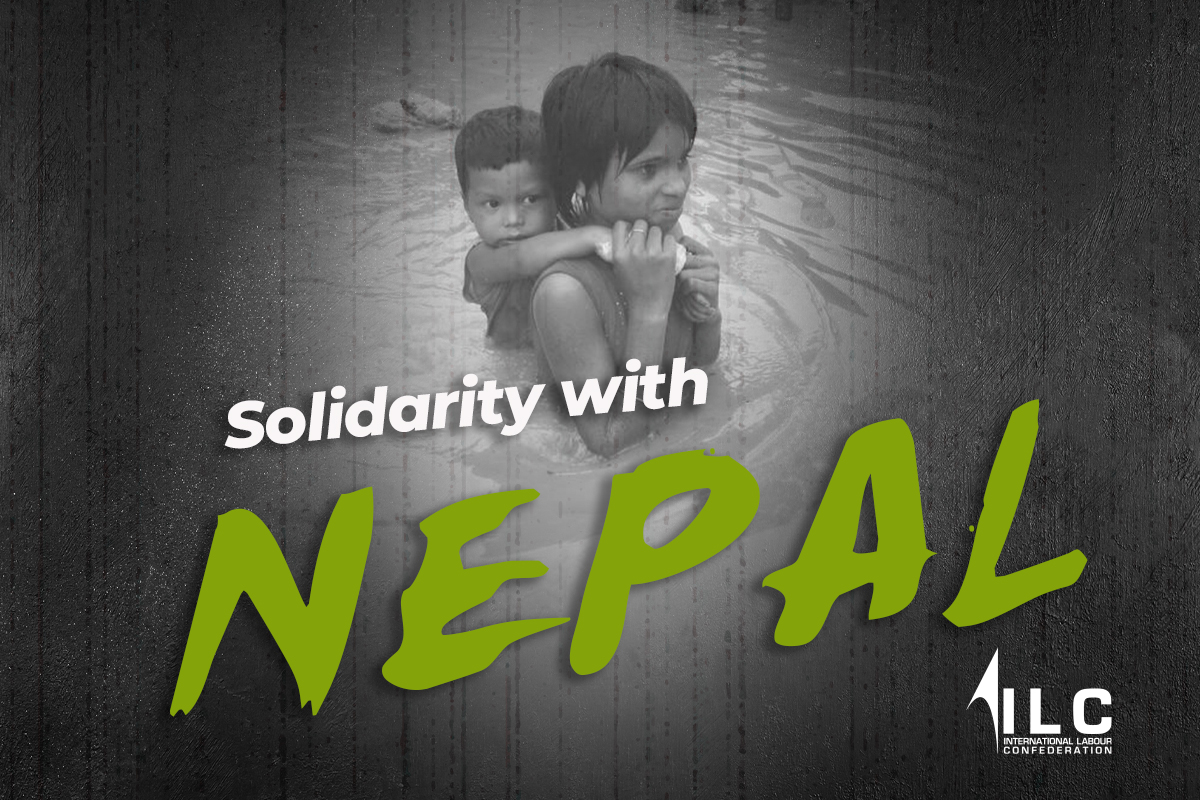
ILC Statement of Solidarity with Nepal Following the Flood Disaster
ILC Statement on International Youth Day Justice for Youth, Solidarity for the Future
Statement on The World Day Against Trafficking in Persons
ILC Organises EU Project Writing and Capacity Building Training for Trade Union Staff
Labour and Human Centred Digital Transformation
Istanbul EdUnion Forum 2026
The Platform Economy Convention is a Critical Step for Labour Rights