News / Blog
ILC President Ali Yalçın at COP31: “Workers Must Not Pay the Price of the Green Transition”

The climate crisis is not merely an environmental challenge. It is also a question of economic, social and global justice.
This crisis is deeply connected to structural problems rooted in the way we produce, consume and distribute resources and wealth.
For centuries, the global economy has been driven by the pursuit of ever-greater production, consumption and profit, often at the expense of environmental sustainability and social well-being.
Yet the fundamental purpose of an economy should be to improve human well-being and safeguard the right of future generations to a dignified life.
We cannot, therefore, reduce the climate crisis to carbon emissions or technological solutions alone.
To develop effective and lasting solutions, we must address the structural causes of the crisis rather than repeat the mistakes of the past.
Global Inequalities and Climate Justice
When we speak of a just transition, we must confront some fundamental questions:
- Who bears responsibility for causing the climate crisis?
- Who is paying the price for it today?
- Who will bear the costs of the transition?
- Who will benefit from its outcomes?
- And, most importantly, who will have a meaningful voice in shaping these decisions?
Those who have historically contributed the most to the climate crisis are often not the same people who suffer most severely from its consequences.
While economic benefits have been concentrated in certain countries and among particular segments of society, environmental costs have been imposed on much broader populations.
We must therefore recognise countries' historical responsibilities while taking account of their economic capacities and development needs.
Today, as developed countries accelerate their transition towards low-carbon economies, new forms of inequality risk emerging.
A significant proportion of the critical raw materials required for green technologies comes from developing countries.
Yet while these countries bear much of the environmental burden, high-value production and economic benefits are often concentrated elsewhere.
This raises a fundamental question:
 Are we overcoming our dependence on fossil fuels only to create new forms of economic and technological dependency?
As the international labour movement, we must reject such an outcome.
The green transition of one country must never come at the cost of environmental destruction or labour exploitation in another.
We cannot allow one system of dependency to be replaced by another.
When discussing climate justice, we must also confront the immense devastation in Gaza.
The humanitarian catastrophe that has unfolded over the past three years has been accompanied by devastating environmental consequences.
According to assessments by the United Nations Environment Programme, the destruction has generated more than 61 million tonnes of debris.
The conflict has also caused extensive environmental damage, including contamination of agricultural land, destruction of water infrastructure and significant greenhouse gas emissions associated with military operations and the wider destruction.
These consequences will continue to affect the environment and public health long after the fighting ends.
This devastation reveals a fundamental truth:
The struggle for environmental protection cannot be separated from the destruction caused by war.
War devastates human lives, cities and the natural environment alike.
Climate justice requires us to defend human life, peace and nature together.
Workers Must Be at the Heart of a Just Transition
Across the world, the shift towards clean energy and investment in green technologies is gathering momentum.
As trade unions, we support this transformation.
However, how the transition is implemented matters just as much as the transition itself.
The closure of an energy facility does not simply represent a change in production methods. It affects the livelihoods of workers, the well-being of their families and the economic future of entire communities.
This is precisely why we attach such importance to the principle of a just transition.
A just transition means pursuing environmental sustainability and social justice together.
Without social transformation, there can be no just transition. Existing inequalities will simply deepen.
A transition that comes at the expense of workers' jobs, incomes and social protection cannot be considered just.
Workers must not be made to pay the price of the green transition!
Green investment must go hand in hand with quality employment, decent wages, occupational safety and health, and stronger trade union rights.
Vocational training, reskilling and social protection programmes must be integrated into transition policies from the earliest stages of planning.
The challenge is not simply to ensure that workers adapt to the transition.
The transition itself must also be designed around workers' rights, needs and aspirations.
Strong Public Services and Sustainable Development
I would particularly like to emphasise the strategic importance of public services in addressing the climate crisis.
For decades, policies aimed at reducing the role of the public sector and expanding market mechanisms have been pursued in many parts of the world.
Yet recent crises have demonstrated a fundamental reality:
Strong public services are the foundation of strong and resilient societies.
As droughts, floods, wildfires and extreme heat become more frequent and severe, the need for healthcare, education, social protection and disaster management services continues to grow.
Healthcare professionals, teachers, local government employees, forestry workers and emergency response personnel are on the front lines of this struggle.
Strengthening public employees' rights, working conditions, occupational safety and health, and professional capacities is therefore essential to the success of climate policies.
Public employees possess first-hand knowledge of the challenges faced by communities. Their experience and expertise must be reflected in policymaking.
From energy efficiency to disaster management, we must work with public employees to develop solutions that make public services more environmentally sustainable, effective and resilient.
Public services must not be treated merely as a cost. They are an essential investment in a just transition and the resilience of our societies.
At the same time, we must reconsider our understanding of development.
We cannot advocate a green transition while continuing to pursue an economic model that destroys natural habitats, reduces agricultural land and replaces green spaces with concrete.
We must invest in agriculture, farming and rural communities while supporting sustainable production and rural employment.
 Sustainable development is not simply about changing our energy sources. It also requires us to rethink the relationship between humanity and nature.
Alongside the green transition, we must address the implications of digital transformation for the world of work.
Productivity gains generated by artificial intelligence and emerging technologies must be shared fairly with workers, and their digital rights must be protected.
Technological progress must ultimately be measured by the improvements it brings to people's lives.
Social Dialogue and International Trade Union Solidarity
A transformation of this scale cannot be implemented fairly without the meaningful participation of workers.
We therefore regard social dialogue as an indispensable pillar of a just transition.
We greatly value the International Labour Organization's institutional expertise and longstanding commitment to decent work, social protection and tripartite social dialogue.
In particular, we regard the adoption of the Decent Work in the Platform Economy Convention, 2026 (No. 193) at the 114th International Labour Conference as a historic step towards protecting workers' rights in the digital economy.
However, participation at both national and international levels must go beyond formal consultation.
Social dialogue is not about informing trade unions of decisions that have already been made.
It means ensuring that workers have a meaningful voice in the formulation, implementation and monitoring of those decisions.
Having trade unions at the negotiating table is important. What matters most, however, is their ability to influence the decisions made at that table.
This requires strong trade union organisation, effective collective bargaining mechanisms and institutionalised social dialogue.
Trade unions must not merely protect workers from the negative consequences of transformation.
 They must also be recognised as essential actors in shaping the policies that make a just transition possible.
In this regard, international trade union solidarity is more important than ever.
We may come from different countries, regions and trade union traditions.
Our priorities, experiences and approaches may differ.
But we must see these differences not as sources of competition or division, but as strengths that enrich our common struggle.
Our challenges are shared, and so is our future. Our solutions must therefore be developed together.
We must learn from one another's experiences, develop common policies and translate our solidarity into practical cooperation.
The true strength of the international trade union movement lies not in everyone thinking alike, but in our ability to work together for a common future while embracing our differences.
To achieve this, we need clear objectives, adequate resources, realistic implementation timelines and effective monitoring mechanisms.
Shared Responsibility, Collective Action
Distinguished Participants,
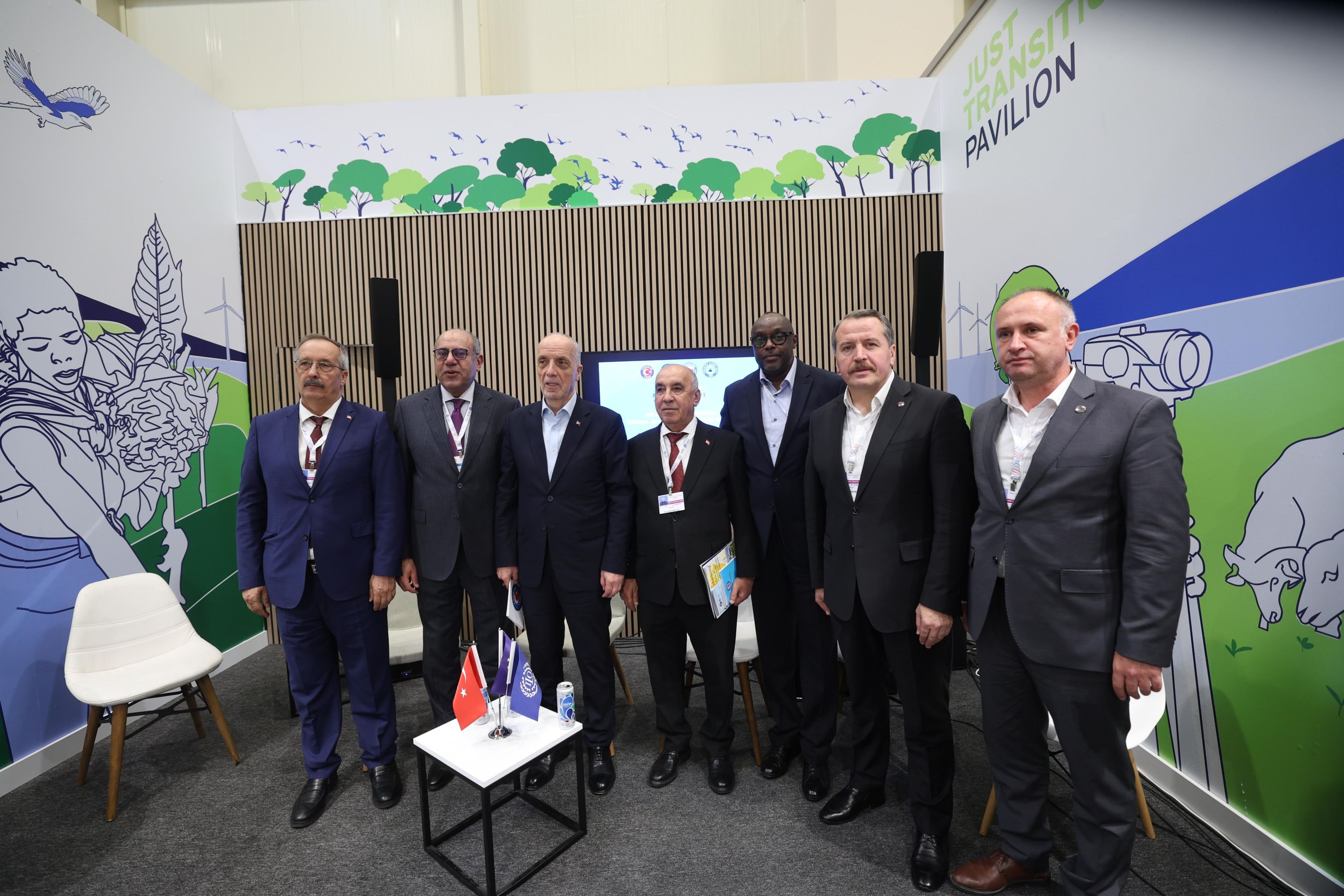
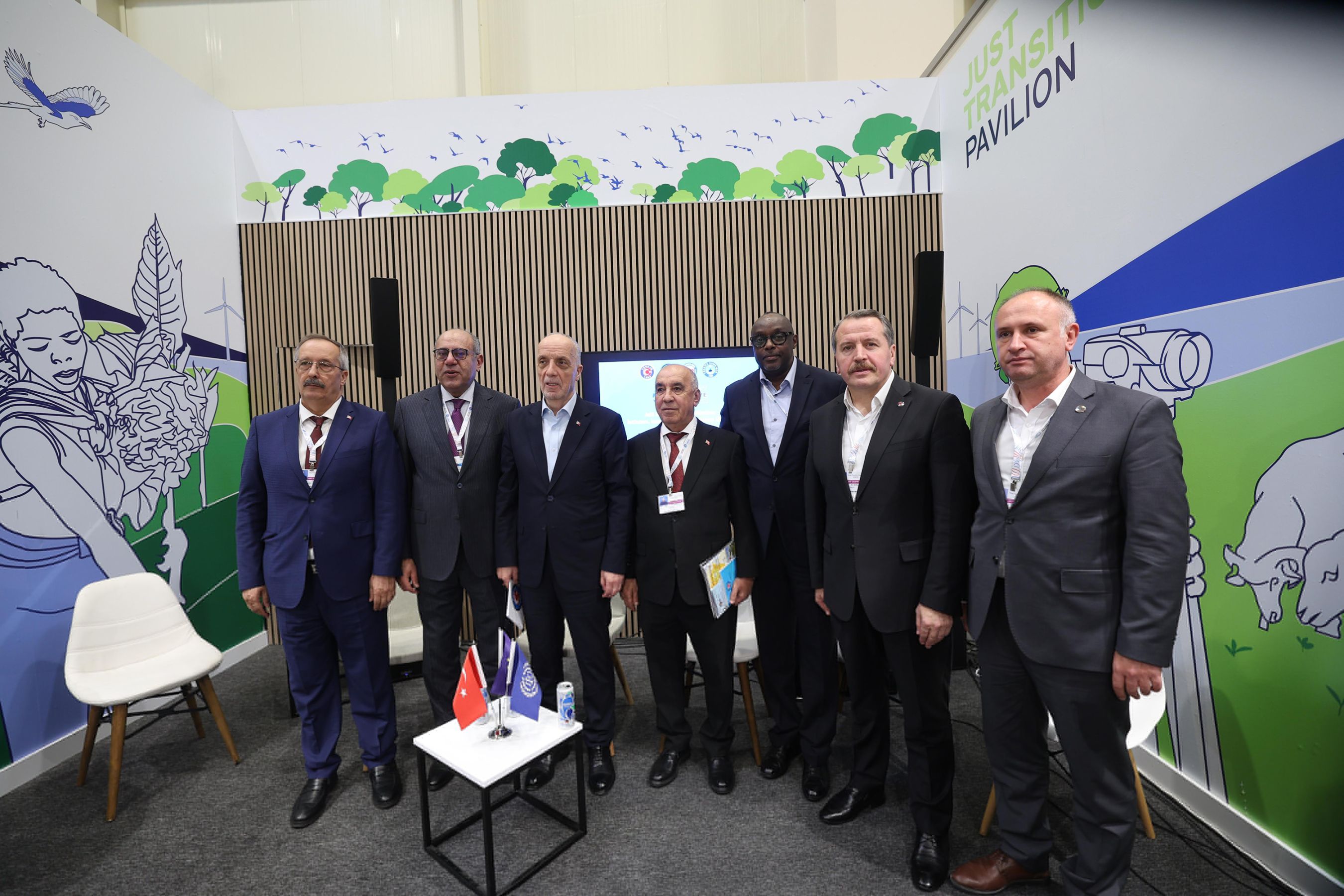
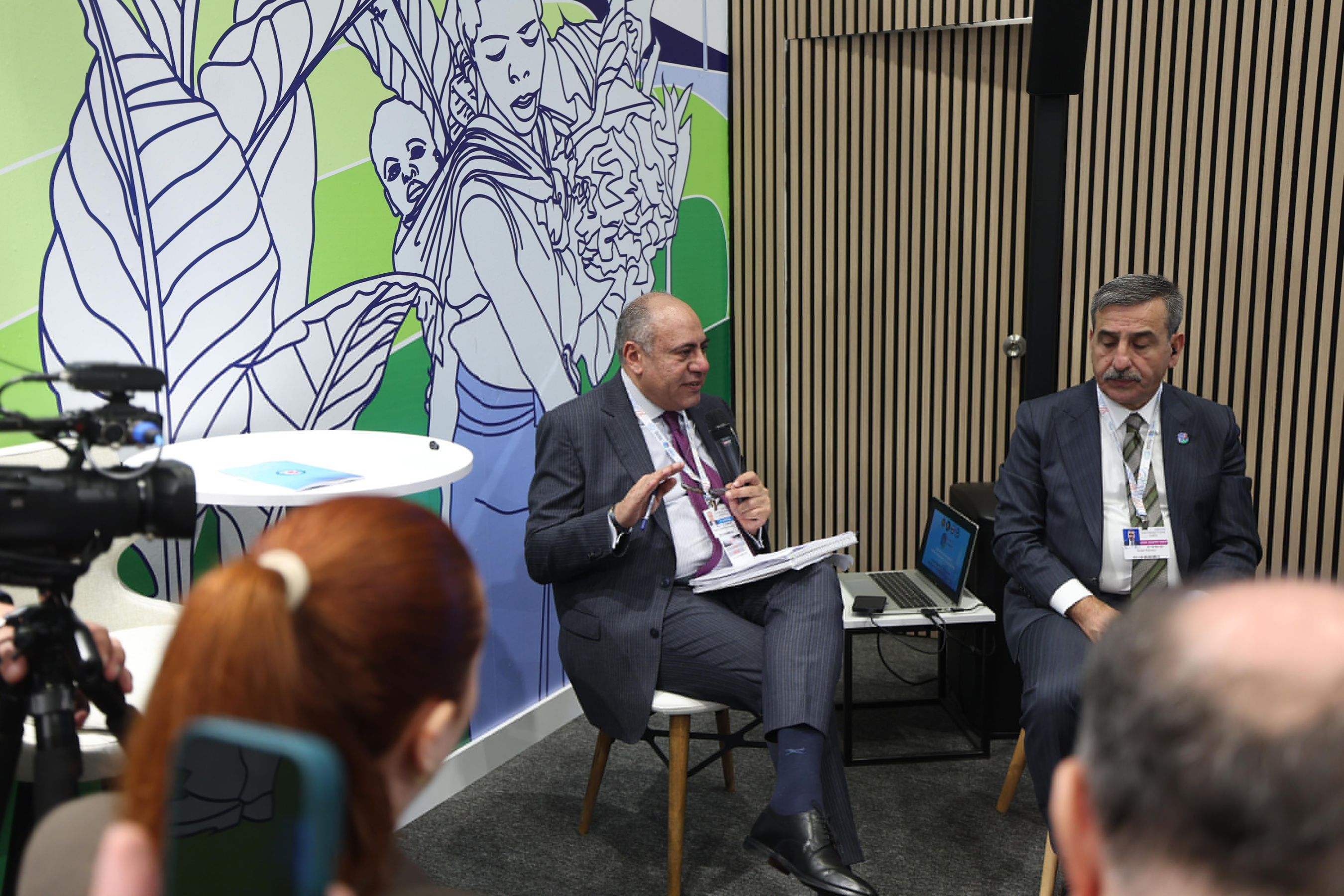
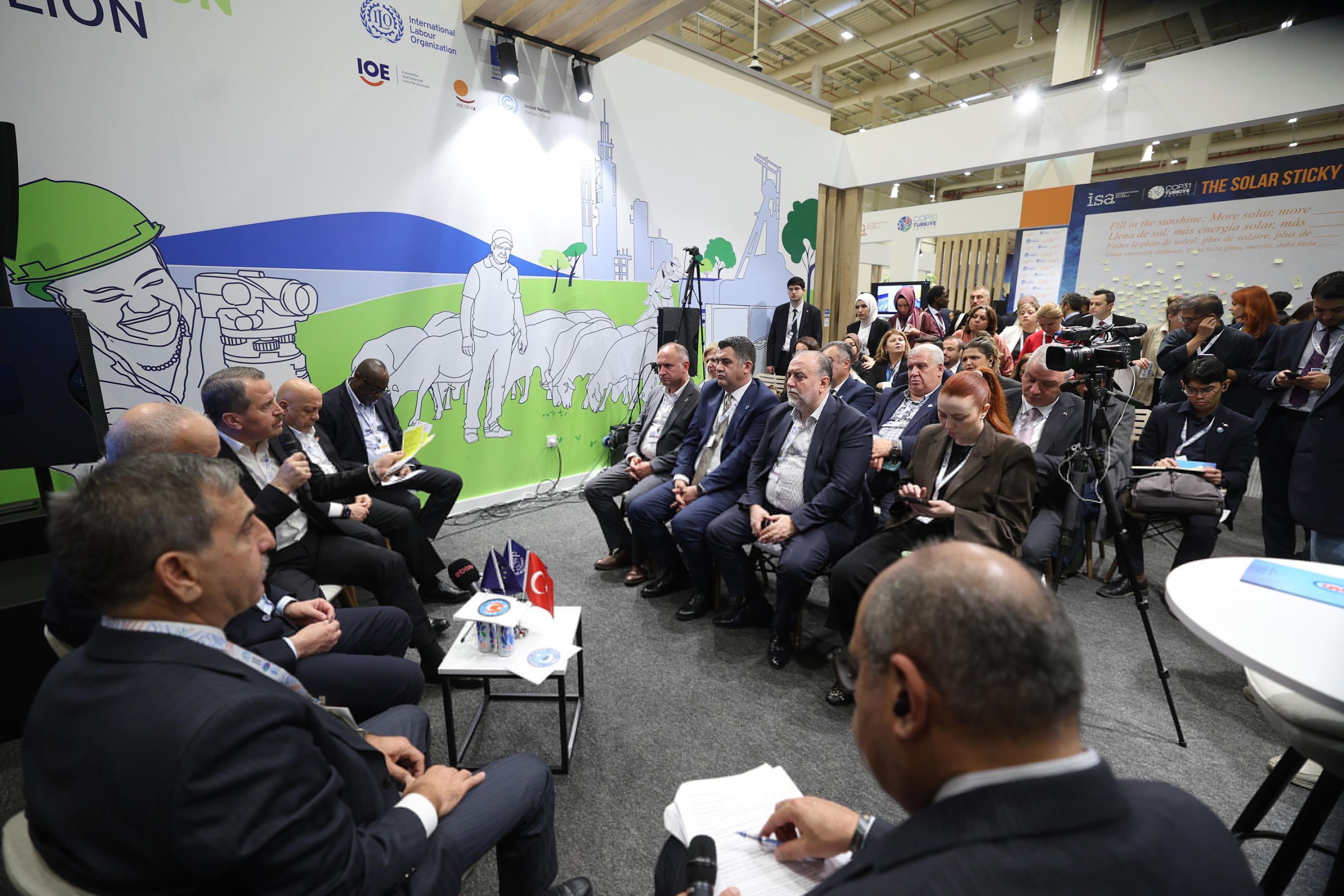
Today, from Antalya, I call upon the international labour movement, governments and decision-makers around the world:
- It is time to translate commitments into concrete policies and measurable results.
- Every country must develop practical just transition programmes with the meaningful participation of social partners.
- Employment security, decent work, vocational training and social protection must be central priorities.
- Climate finance must become fairer, more accessible and more responsive to the needs of developing countries.
- We must strengthen the institutional and economic capacities of countries facing the greatest challenges in the transition.
Let us establish a shared timetable for action and a clear roadmap.
Let us ensure that the dialogue we have established at COP31 does not end when this conference concludes.
We must develop lasting mechanisms for cooperation through which we can exchange experiences, identify common priorities and contribute collectively to the formulation of just transition policies.
Let us bring together the institutional expertise of the International Labour Organization and the practical experience of trade union movements from different countries.
What the world needs today is an international labour movement that does more than identify problems: a movement that develops solutions, shapes policies and drives meaningful change.
We are committed to turning these principles into collective action, strengthening international trade union cooperation and taking concrete responsibility for building a just future.
 Building a Just Future Together
The climate crisis represents a profound challenge for humanity.
Yet confronting this challenge also offers an historic opportunity to build a more equitable economic order and a more humane world of work.
Today, let us send a common message from Antalya to the entire world:
- Our struggle against the climate crisis is shared, and so is our responsibility to build a just future.
- Let us build a just transition not merely for workers, but together with workers.
- Let us place labour at the heart of environmental protection, people at the centre of economic transformation, and social justice at the core of development.
- Let us leave future generations not just a liveable environment, but a world founded on justice, security and human dignity.
Above all, let us remember:
The future of work must not be shaped without workers. And the future of our planet must not be built at the expense of social justice.

Different Languages, One Humanity, One Heart for Gaza
ILC President Ali Yalçın at COP31: “Workers Must Not Pay the Price of the Green Transition”
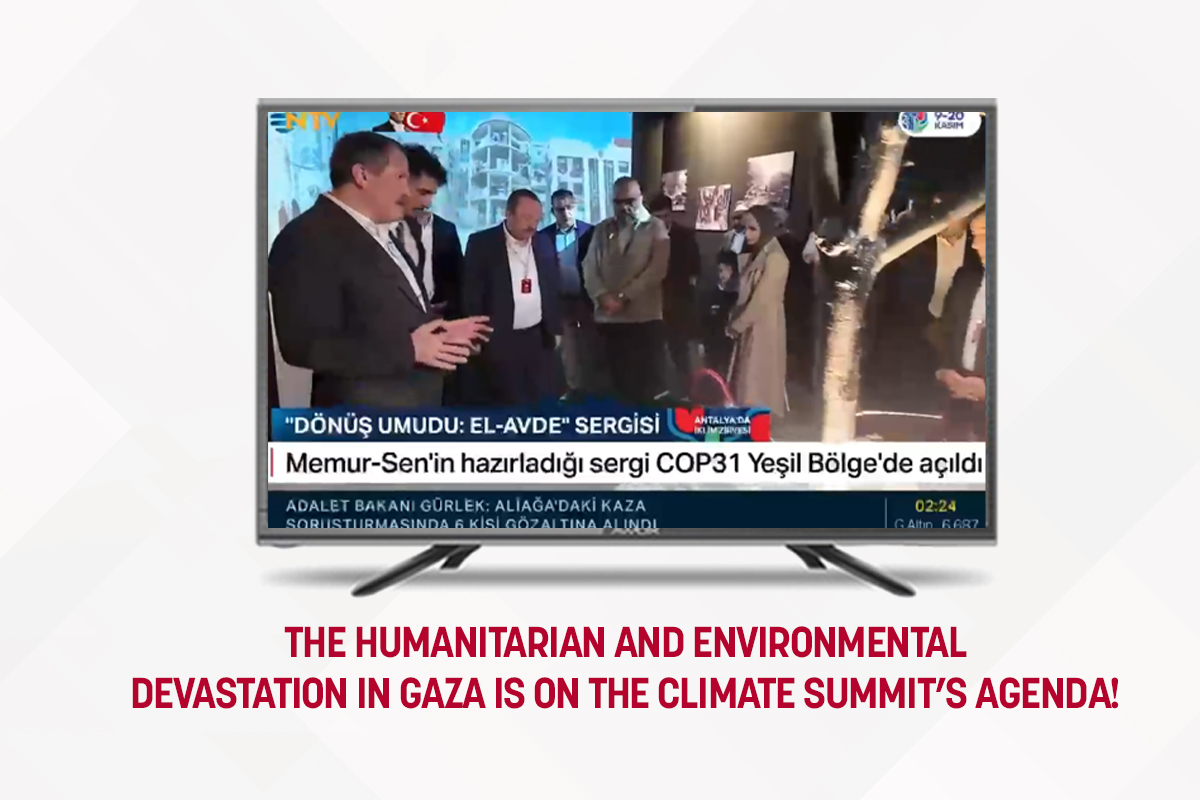
The Humanitarian and Environmental Devastation in Gaza is on The Climate Summit’s Agenda!

Gaza’s Voice Reaches Beyond Borders at COP31

People and Labour Must Be at the Heart of the Green Transition
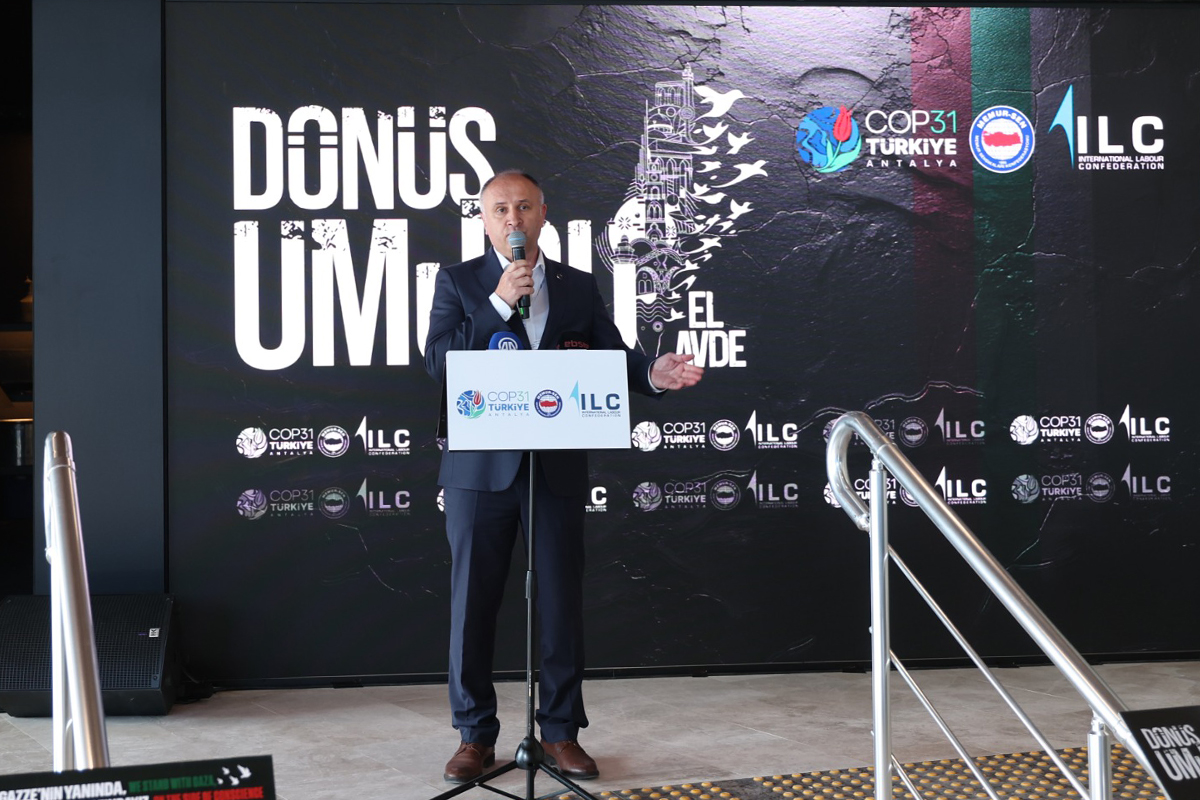
Although languages and colors may differ, hearts beat for Gaza.
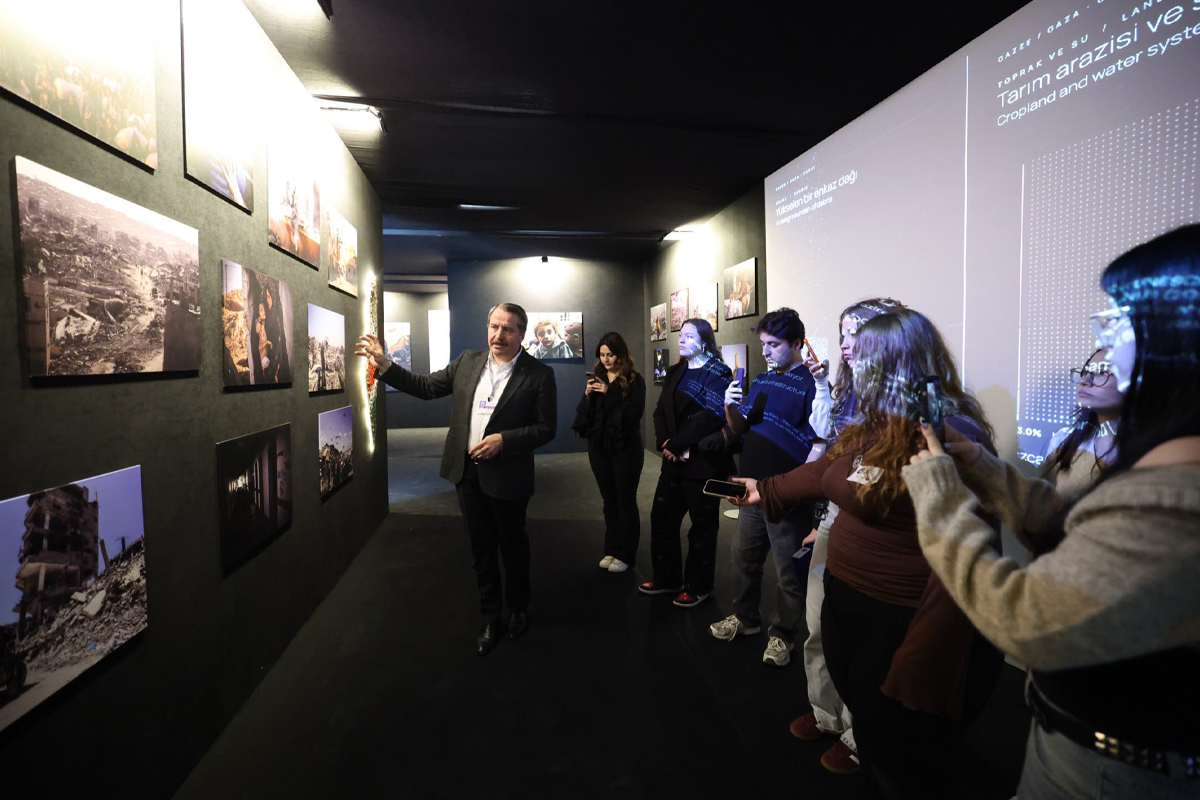
An Olive Tree, a Key, and the Hope of Return: Gaza’s Story at COP31
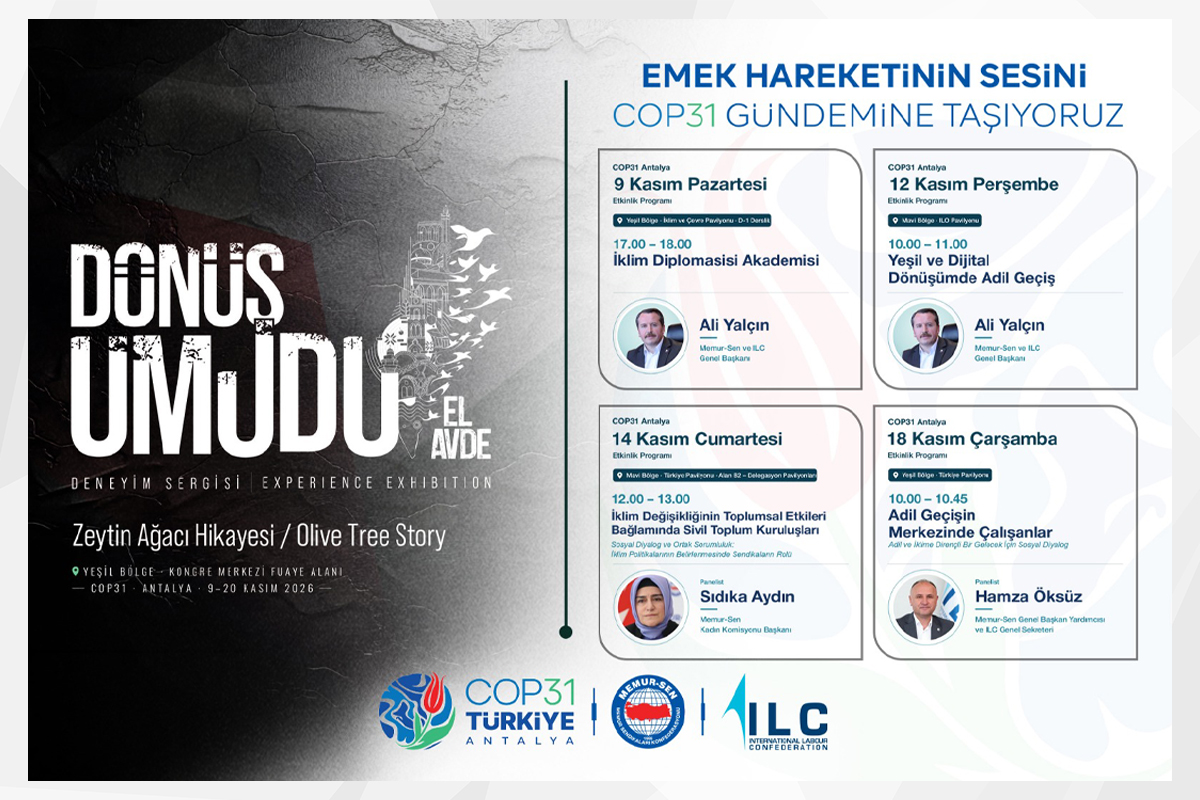
ILC & Memur-Sen will participate to Bring the Voice of the Labour Movement to the COP31 Agenda

We Met with a Delegation from GFIW, Our Executive Board Member, in Ankara
ILC and CLATE Call for Joint Action and International Solidarity
ILC Secretary General Hamza Öksüz Addresses the Future of Labour Amid Technological Transformation in Belarus
WORLD DAY FOR DECENT WORK
Statement on the International Day of Peace
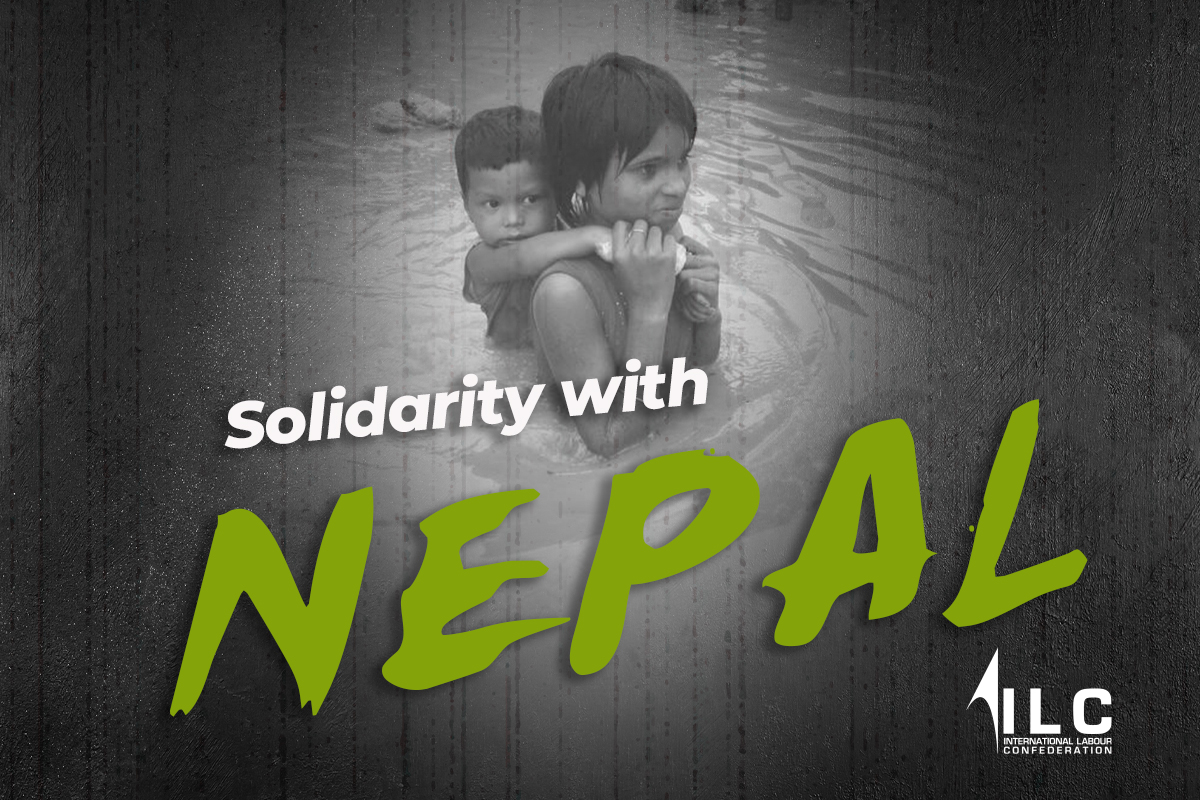
ILC Statement of Solidarity with Nepal Following the Flood Disaster