
News / Blog
The Crisis of Social Justice in an Age of Wealth
Abstract
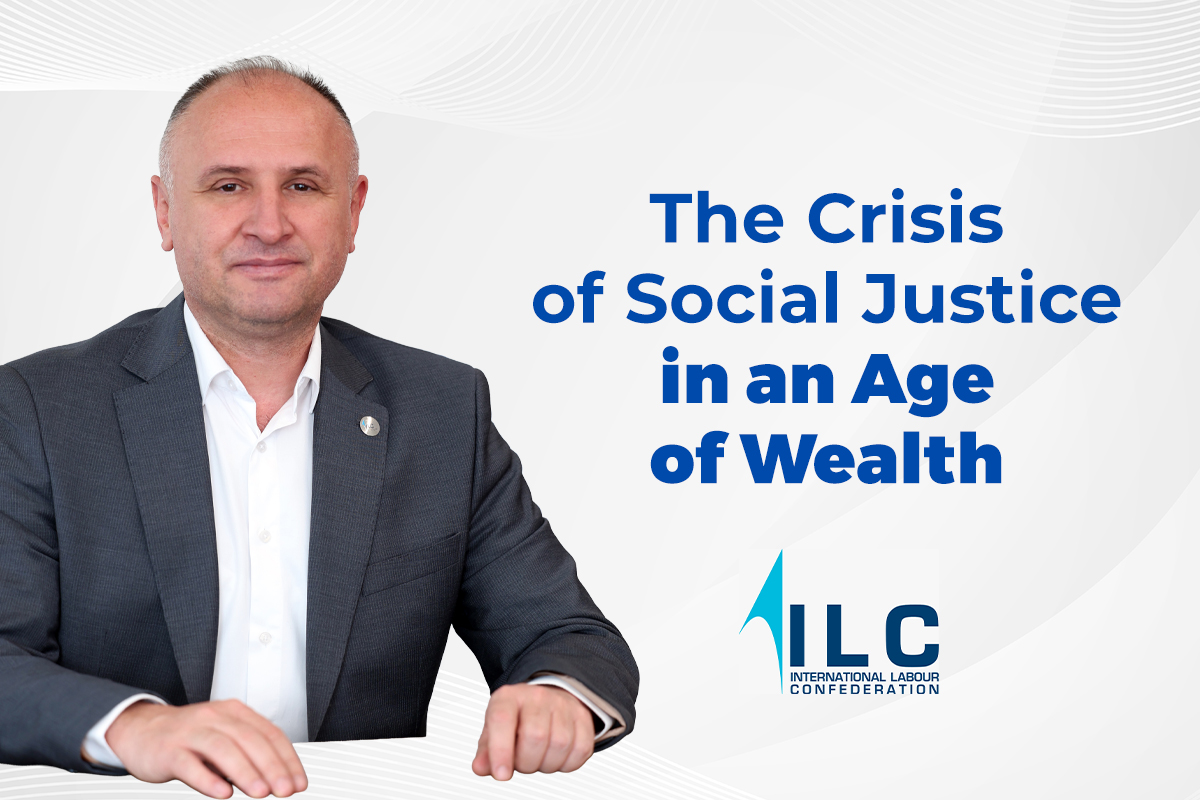
Today’s world has reached an unprecedented level of economic capacity, generating wealth on a scale never before witnessed in human history. Yet at the same time, millions remain trapped in precarious employment, billions lack adequate social protection, and inequality continues to deepen. This contradiction is not accidental; it is directly linked to how global economic transformation is governed. Despite the strong rhetorical commitment to social justice across international platforms, its persistent absence reveals a fundamental reality: the problem is not merely one of implementation, but of policy orientations that fail to confront the structural roots of inequality. In this sense, World Social Justice Day should not be understood merely as a symbolic moment of awareness, but as an opportunity to critically examine why social justice remains unrealized.
Humanity is currently experiencing one of the most productive periods in its history. The global economy generates record levels of wealth, technological innovation is rapidly transforming production processes, and digitalization continues to open new economic horizons. Yet simultaneously, billions remain excluded from adequate social protection, in-work poverty is becoming entrenched in many regions, and income inequality continues to widen. This contradiction is not incidental; it reflects the ways in which global economic transformation has been structured and managed.
The issue is not a lack of global wealth; rather, it is the increasingly narrow political space within which decisions about how that wealth is distributed are made.
The systematic decline of labour’s share in income despite rising productivity, the failure of economic growth to benefit broad segments of society, and the institutionalization of precarity are key outcomes of prevailing global economic orientations. Over the past four decades, policy frameworks prioritizing cost competitiveness and market flexibility-when not balanced by strong labour standards and social protection-have intensified inequality. As economic performance indicators strengthened, the individualization of social risks weakened labour’s bargaining power and transformed insecurity into a structural feature of the global economy.
Governments, international organizations, and many labour institutions today emphasize the importance of social justice in strong normative terms. However, rhetorical commitment alone cannot produce meaningful transformation if the structural roots of inequality remain unaddressed. Current policy approaches often focus on mitigating symptoms while avoiding deeper questioning of the economic choices and power relations that generate inequality. Social justice cannot advance without confronting the decisions that shape how the system operates. Unless the structural sources of inequality are made visible, the gap between the discourse of social justice and social reality will persist.
One of the greatest obstacles to meaningful progress in social justice debates is the systematic depoliticization of economic issues. Questions such as income distribution, social spending, and labour market regulation -fundamentally rooted in political choices-are frequently framed as technical necessities or inevitable economic realities. This approach obscures the political nature of inequality while narrowing democratic debate.
As economic questions are depoliticized, social discontent increasingly manifests through cultural and identity-based conflicts. This dynamic shifts attention away from the material foundations of inequality and generates new political narratives that obscure structural economic causes. Social justice must therefore be addressed not only through social policy instruments but through the re-politicization of economic decision-making itself. Making structural inequalities visible is a precondition for restoring meaning to the concept of social justice.
International institutions and global labour organizations are also approaching a critical moment of repositioning in response to these transformations. The historical normative contributions of the International Labour Organization (ILO) to the development of social standards are undeniable. Yet today’s challenge lies less in the absence of norms than in the inability of the current global governance architecture to match the speed of economic transformation in terms of binding authority and implementation capacity. While global production networks operate across borders, social protection and labour regulations remain largely confined within national frameworks. This structural asymmetry expands the mobility of capital while constraining the collective power of labour. Moreover, intensified geoeconomic competition and global capital mobility generate new pressures that narrow the policy space available to international labour institutions.
This reality points to a clear conclusion: norms alone are not sufficient. Unless global power relations are rebalanced in favour of labour and international labour governance evolves beyond norm-setting towards stronger implementation capacity and binding mechanisms, the gap between social justice rhetoric and tangible outcomes will continue to widen.
Social justice is not a by-product of economic systems; it is the outcome of conscious choices about how those systems are designed. The future of social justice will be shaped by collective political will and by the decisions we make regarding whom the economy ultimately serves—and these decisions cannot be postponed.
What is needed today is not merely a more efficient functioning of existing systems, but a redefinition of policy priorities around social justice. For the global labour movement, this means moving beyond the defence of norms towards active participation in shaping the decision-making processes that determine the direction of economic transformation. Social justice can no longer be confined to the realm of social policy alone; it must be embedded at the centre of economic governance-from employment strategies and trade policies to digital transformation and climate transitions. This requires labour organizations to move beyond defensive positions and become founding actors in policy design.
Within this context, the role of the trade union movement in the emerging global order cannot remain limited to defending existing rights. It must involve a strategic repositioning as an active and constitutive actor in shaping economic transformation itself. In an era marked by transnational production networks, accelerating digitalization, and intensifying geoeconomic competition, international cooperation is no longer optional-it is a historical necessity. The future of labour can only be secured through strengthened transnational solidarity, globally protected social standards, and governance structures that ensure direct labour participation in policy-making processes.
Social justice must therefore be understood not merely as a normative aspiration, but as a historical responsibility requiring concrete policy measures that transform the quality of employment, strengthen social protection systems, and democratize economic decision-making. Trade unions, in this historical moment, must not remain passive observers of global transformation; they must act as guiding actors in the construction of a more just and inclusive global economic order.
WORLD DAY FOR DECENT WORK

Statement on the International Day of Peace

ILC Statement of Solidarity with Nepal Following the Flood Disaster

ILC Statement on International Youth Day Justice for Youth, Solidarity for the Future

Statement on The World Day Against Trafficking in Persons

ILC Organises EU Project Writing and Capacity Building Training for Trade Union Staff

Labour and Human Centred Digital Transformation
Istanbul EdUnion Forum 2026
The Platform Economy Convention is a Critical Step for Labour Rights
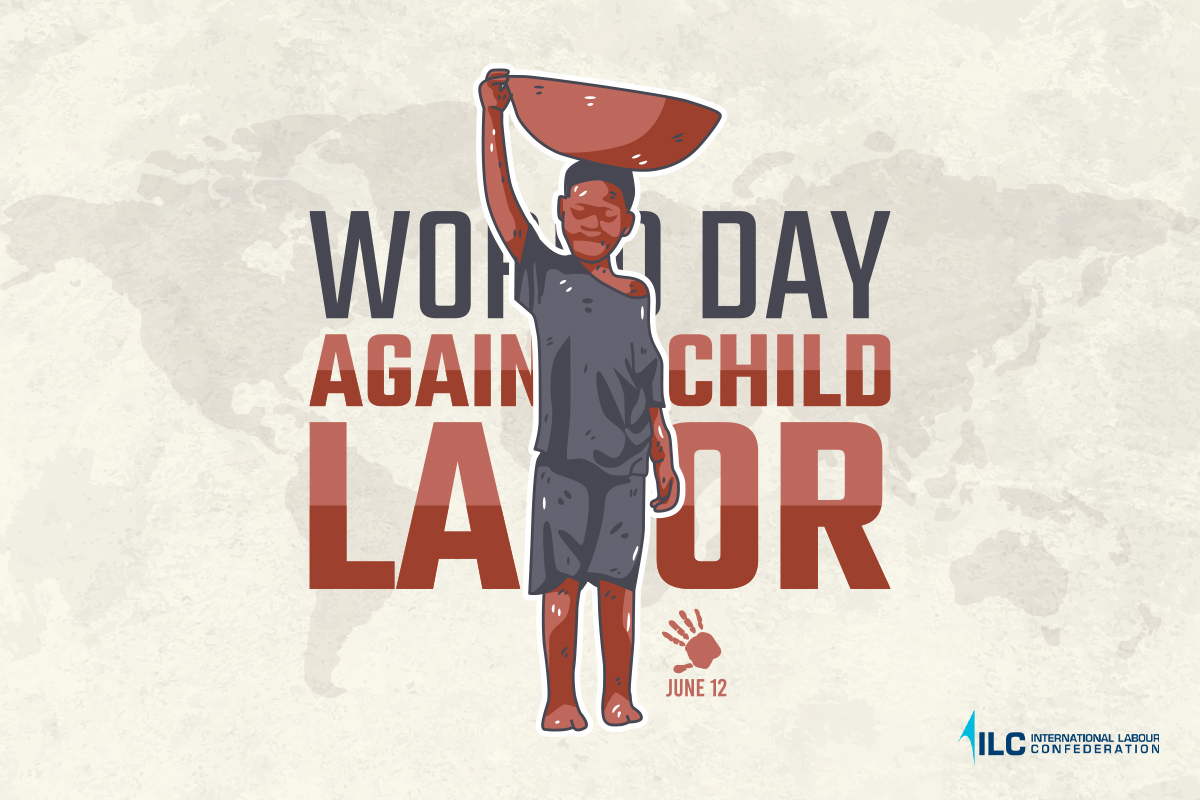
World Day Against Child Labour
Children Are Not Our Workers, They Are Our Future!
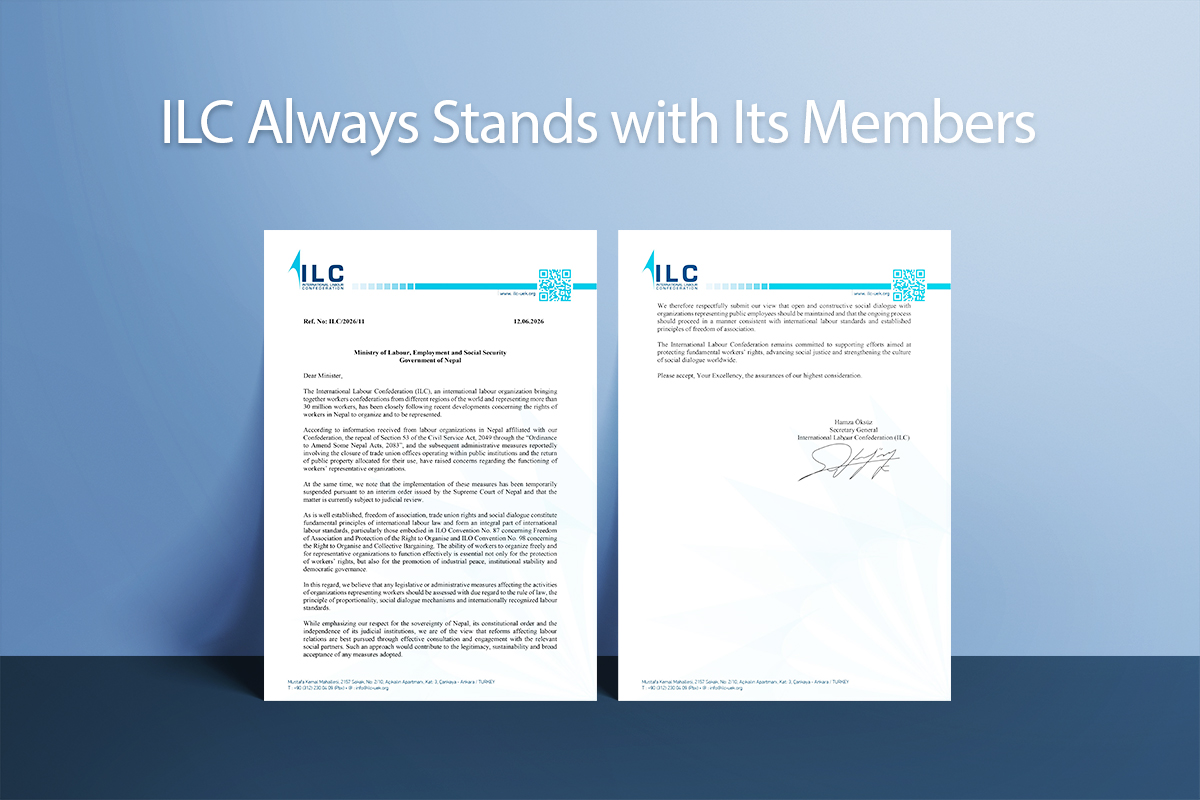
ILC Always Stands with Its Members
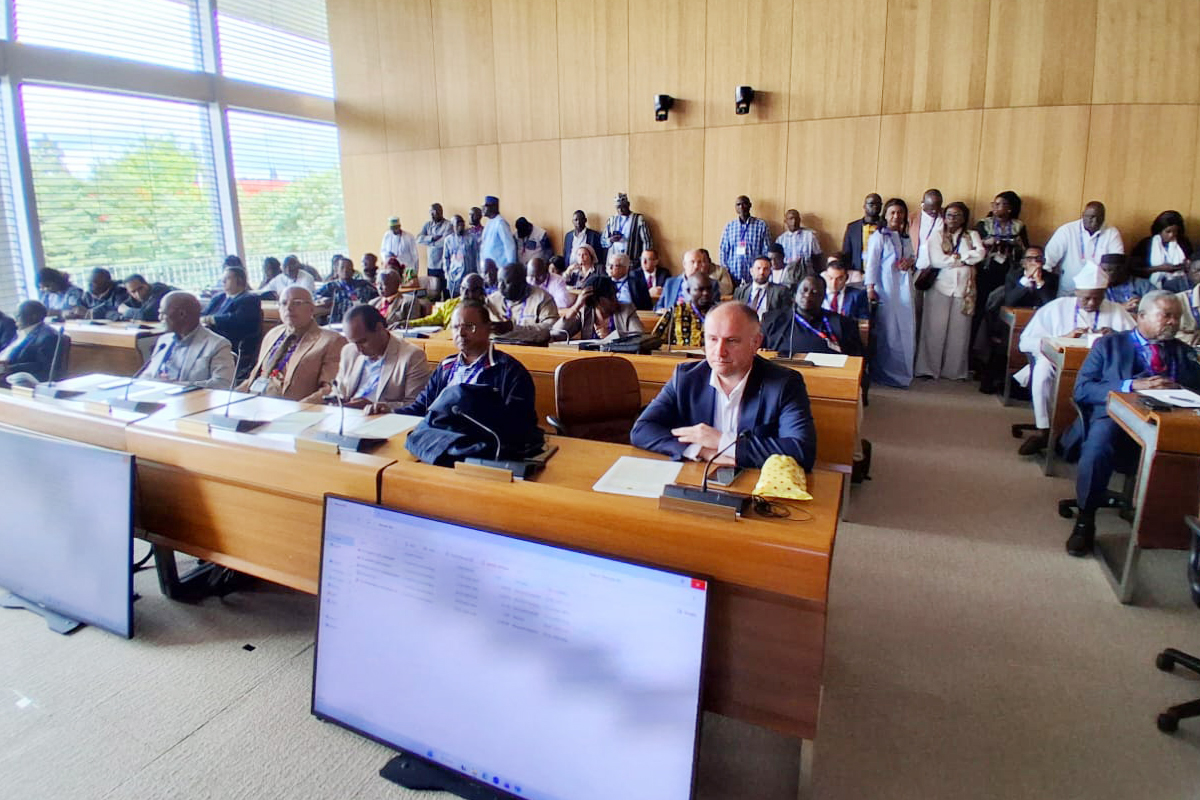
ILC Secretary General Hamza Öksüz Participates in OATUU Meeting
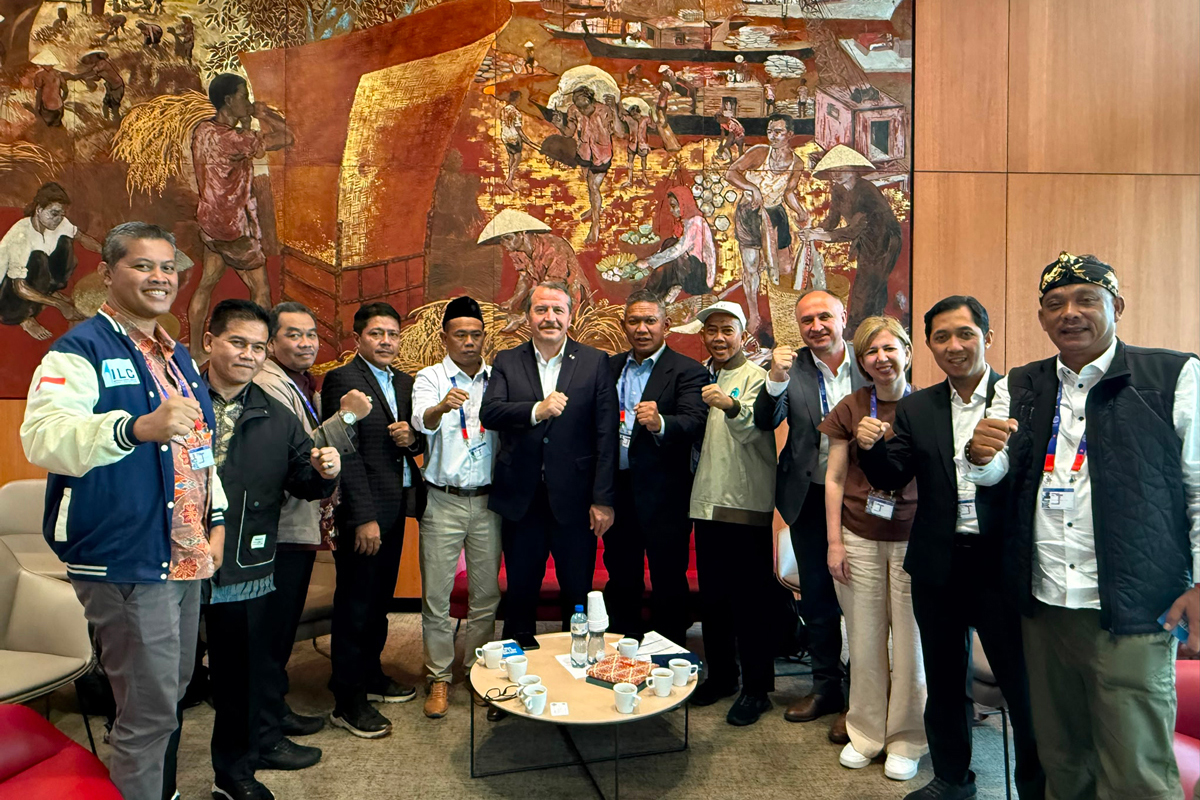
Bilateral Meetings Held on the Margins of the 114th International Labour Conference
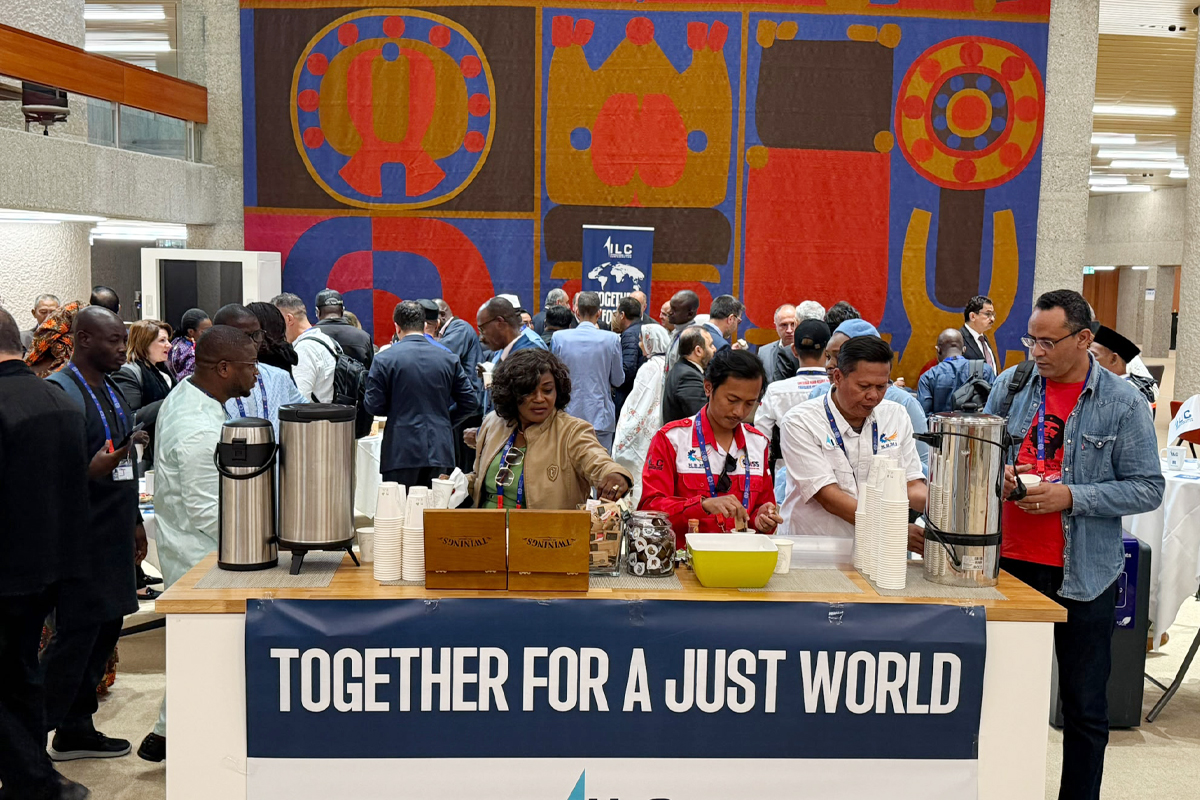
Traditional ILC Reception in Geneva Brought Together Representatives of the International Trade Union Movement